
Case Study: Rhumbix & Coho Growth
From Founding Vision to Autodesk Acquisition: How Growth Debt Powered the Final Chapter
Overview
Rhumbix was founded in 2014 with a simple but powerful thesis: construction's chronic cost overrun problem was a data problem. After more than a decade of building, adapting, and scaling a loyal customer base in one of the most demanding industries in technology, the San Francisco-based construction technology company was acquired by Autodesk in April 2026. The transaction was a strong outcome for founders, employees, equity investors, and Coho Growth investors alike.
“Our relationship was only about a year, but Coho Growth played a key role in capitalizing the company so that we could focus on building the business, and not worry about cash. The end result was a really good acquisition, so that's awesome!”
Zach Scheel, CEO and Co-Founder, Rhumbix
This case study traces Rhumbix's journey from founding insight through to strategic exit, with a focus on how growth debt financing from Coho Growth in spring 2025 gave CEO Zach Scheel and his team the runway, clarity, and confidence to execute the final chapter of the company's story.

Zach Scheel, CEO and Co-Founder, Rhumbix
At a Glance
Founded: 2014, San Francisco, CA
Sector: Construction Technology (Vertical SaaS)
Key Equity Investors: Greylock Partners, Blackhorn Ventures, Tenfore Holdings, Brick & Mortar Ventures, Autodesk Forge Fund
Coho Growth Financing: Spring 2025
Cash Burn Reduction and ARR Growth: 87% reduction in cash burn over the past two years, while simultaneously reigniting growth off a flat year to 15%, followed by 30% in the final year before acquisition
Exit: Acquired by Autodesk, April 2026
The Origin: A Billion-Dollar Data Problem
The seed of Rhumbix was planted not in a boardroom, but on a remote copper mine in northern Chile. Zach Scheel was working on a $3.5 billion construction project that went a billion dollars over budget. The culprit was data, or more precisely, the absence of it.
"The primary source of data was a thousand paper time cards handwritten in Spanish, being turned in every day to track work of 7,000 to 8,000 craft labourers. By the time the project controls team was reviewing the data, it was two weeks old and wrong."
Zach Scheel
That experience became the epiphany moment that led Scheel to co-found Rhumbix in 2014 with Drew DeWalt. The original concept was ambitious: use wearables and IoT technology to passively detect work completion on job sites. But the market quickly redirected them.
As Scheel recalls, when they were working with prospects in that first year, the feedback was consistent: "I see what you're trying to do, but honestly, if you could just get rid of the paper time cards today, I'd pay you for that product." That pivot, from passive IoT sensing to a mobile-first SaaS platform for structured field data capture, defined everything that followed.
Product-Market Fit: Workers First
In an industry described by Scheel as "laggard in terms of modern software," achieving adoption required a different playbook. Previous solutions had attempted to digitize construction workflows but were built before UI and UX were even industry acronyms. Rhumbix bet on simplicity.
The company's clearest signal of product-market fit came from tracking weekly active users, specifically the foremen and crews in the field.
"As soon as the foreman got their hands on it, they'd go, 'This is so easy to use. Are we getting this?' Workers First was one of our core values and the lens through which we build our product. Once we unlocked evangelism among field users, we knew we had something."
Zach Scheel
This insight, that field-level adoption was the key to unlocking the financial value sought by CFOs, Controllers, and Project Executives, became the strategic foundation of the business. Rhumbix's go-to-market followed suit: direct and field sales, trade shows, job site visits, and industry associations. It was, as Scheel puts it, "press the flesh" selling. The customer acquisition costs were higher than in horizontal SaaS, but so was retention. Construction customers, slow to change, became long-term partners once they started working together.

The Capital Raising Journey
Rhumbix followed a venture-backed growth path in its early years. Greylock Partners led the Series A in 2015, followed by a Series B that included Blackhorn Ventures, Tenfore Holdings, and a strategic investment from Autodesk in 2018. The company was executing steadily on its growth roadmap.
When COVID-19 arrived in 2020, Rhumbix faced an unexpected industry headwind. Their software was deployed to foremen managing physical job site crews, and customers were focused on adapting their operations, not adopting new field technology for their crews. The team responded by staying lean, staying close to customers, and continuing to execute on the product vision.
As the broader technology market shifted in 2022 and 2023, Rhumbix made a deliberate strategic decision: pivot to profitability, reduce cash burn, and build a more durable, capital-efficient business. Scheel and his co-founder reduced annual operating expenses from $6 million to less than $800,000, sharpening the business around its strongest customers and most defensible product capabilities.
The results followed. From a period of flat growth, Rhumbix climbed back to 15 percent ARR growth, then to 30 percent over two consecutive years, while continuing to improve its cost structure. The business was approaching a Rule of 30 and was on track to reach profitability in 2026. The foundation was strong, and the team was executing. What Scheel needed next was a capital partner who understood the business and could provide the runway to fully focus on the opportunity ahead.
Why Growth Debt: The Decision to Work with Coho Growth
In spring 2025, Rhumbix was introduced to Coho Growth through a close relationship at a later-stage software lender. The fit was immediately apparent.
Coho moved from initial data review to term sheet in under 24 hours, fast enough that Scheel and CFO Jeff Woglom were able to present the new financing plan to their board that same afternoon.
"Your guys' agility, and ability to quickly get up to speed on our business and get comfortable underwriting a term sheet, was part of the success story. Once we closed with Coho, I literally felt a huge weight off my shoulders for the first time in 11 years."
Zach Scheel
What distinguished the Coho term sheet was not just speed, but structure. The facility was appropriately sized, with a year of interest-only payments to allow the company to reinvest in growth before principal repayment ramped up. The payment schedule aligned precisely with Rhumbix's proforma, which by spring 2025 was highly dialed in and producing a predictable, growing business.
"The terms you guys put forward allowed us to finally get out of constant fundraising mode and focus more clearly on the business. I credit that with being able to think more clearly as a founder and a leader when I'm not spending half of my time looking for the next check."
Zach Scheel
Use of Proceeds: Building Rhumbix 3.0
With genuine long-term runway secured, Rhumbix invested the Coho proceeds in two strategic priorities.
The first was pipeline generation. While Rhumbix was consistently hitting sales targets off its installed base, there was an opportunity to build a more scalable inbound motion. The first hire enabled by the Coho facility was a VP of Marketing, with a mandate to build an agentic marketing technology stack capable of generating systematic, predictable pipeline.
The second priority was AI transformation. Scheel had developed strong conviction that AI tools were ready to drive meaningful operational leverage across the business. The proceeds funded an AI transformation advisor, Amandeep Khurana, and the build-out of what Scheel calls "Rhumbix 3.0," a post-AI version of the company designed to scale capability and capacity without proportional headcount growth. By late 2025, Rhumbix was running a fully agentic marketing stack and seeing strong pipeline results.
"It was the first time in 11 years I had an infinite runway on plan, with a good buffer if we were slightly off. That created a lot of clear-headedness and the ability to really focus on execution."
Zach Scheel
The Exit: A Decade in the Making
Autodesk had been part of the Rhumbix story since 2018, investing in the Series B and becoming a long-term co-selling partner that regularly brought Rhumbix into deals to fill a meaningful gap in their own product offering. The relationship deepened steadily over the years.
"In the last year, the problems that Rhumbix solves rose to the top of Autodesk's strategic priority list, and that's what kicked off the discussions that ultimately led to the M&A"
Zach Scheel
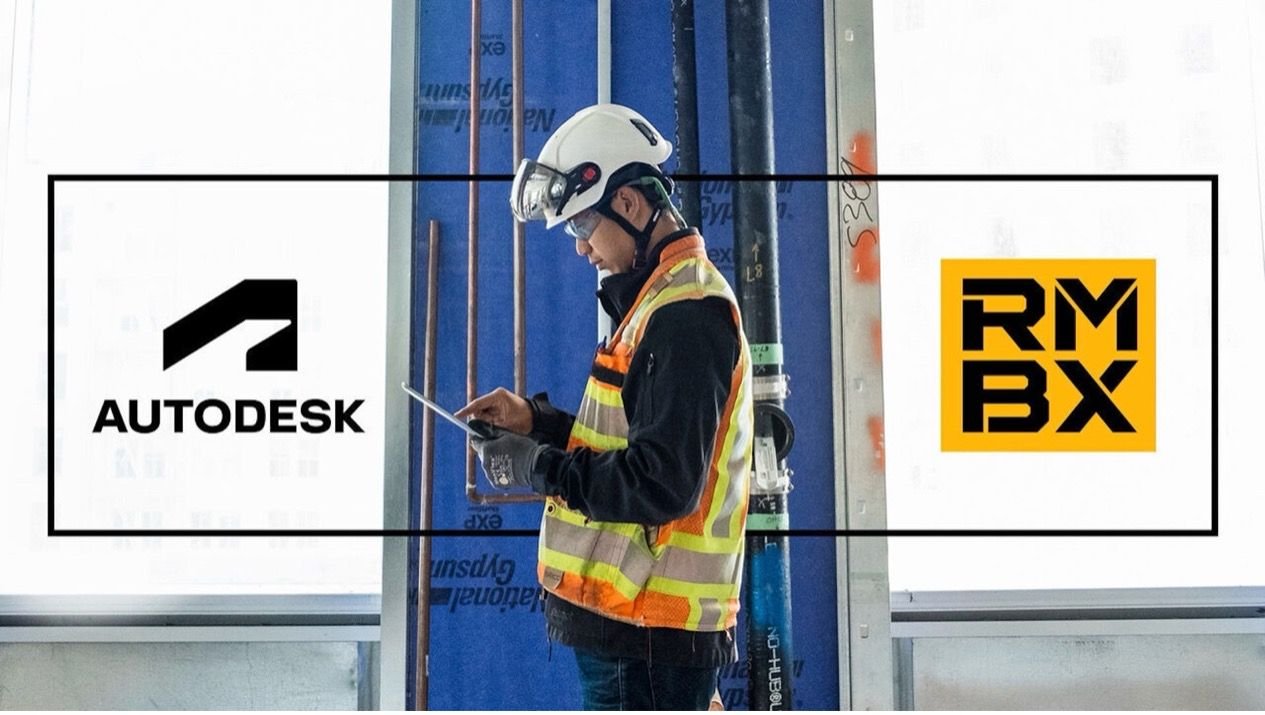
The acquisition was formally announced and closed in March 2026. Rhumbix's platform, focused on real-time jobsite data, timekeeping, labor productivity, and compliance, will be integrated into Autodesk Forma to strengthen field-to-finance workflows across the construction project lifecycle.
The outcome was a meaningful one for everyone involved.
The Outcome
Rhumbix was the first exit from Coho Growth's portfolio, which had launched just two and a half years before the transaction closed (November 2023). The result was a strong outcome for all stakeholders: founders, employees, equity investors, and Coho Growth's investors.
The performance speaks for itself. Rhumbix grew ARR from flat to 15 percent to 30 percent over two consecutive years while reducing annual cash burn from $6 million to less than $800k, a transformation that put the business squarely in Rule of 30 territory and on a clear path to profitability.
"We were on the right track, we just needed a partner who understood our business and believed in us. Coho did exactly that."
Zach Scheel
What’s next for Rhumbix: Looking ahead!
Now part of Autodesk, Rhumbix enters its most consequential chapter yet. The Rhumbix team has joined Autodesk with a clear mandate: scale the platform globally and deepen its integration across Autodesk Forma, the company's flagship construction platform. The focus will be on strengthening field-to-finance workflows, connecting real-time jobsite data on labor, production, and time-and-materials work with cost management, scheduling, and planning systems downstream.
As Zach Scheel shared at the time of closing: "Joining Autodesk gives us the ability to do what we've always done, but at a scale we couldn't achieve on our own." For two founders who spent 4,399 days building Rhumbix from a paper timecard problem on a Chilean copper mine, the acquisition marks not an ending but a beginning. As Scheel put it on LinkedIn: "It's the beginning of the next chapter of scaling our technology globally."
A Note from Coho Growth
"We were impressed with Zach, Jeff, Drew, and the entire Rhumbix team from the start. Their ability to execute on a clear plan, grow a loyal customer base in a demanding industry, and deliver a meaningful exit speaks to the quality of founders we look to back. Although our journey together was relatively short, the Rhumbix partnership was everything we look for at Coho Growth: a strong outcome for the founders, the employees, the equity investors, and our own investors. We are proud to have played a small part in their story."
Rob Foxall, Managing Director & Co-Founder, Coho Growth

Rob Foxall, Managing Director & Co-Founder, Coho Growth
